

In the Himalayas, architecture is not just built—it’s negotiated. Every wall is a response to wind, every window a dialogue with the sun. Amid shifting contours and uneven terrain, every foundation must adapt before it can rise. In this terrain of extremes, where the climate can shift from harsh glare to biting frost within hours, the question isn’t just how to survive—but how to belong.
In this landscape of altitude and awe, glass takes on a new identity. No longer just a marker of modernity or transparency, it becomes a medium of adaptation, a tool that filters light, encloses warmth, and reflects the grandeur of its surroundings. Designing with glass here is both science and sensitivity, demanding that architects balance the physics of heat with the poetics of place.
In a recent webinar by Saint-Gobain’s Glass Academy, Ar. Saubhagya Daksh reimagined glass in the harshest of terrains—the Himalayas. Founder of IDIEQ and an alumnus of the Indian Institute of Human Settlements, Saubhagya approaches the mountains as his design brief, laboratory, and collaborator.
Through stunning case studies, he demonstrated how strategic material choices and precision engineering enable light-filled, view-rich mountain homes—without compromising on thermal comfort, safety, or simplicity. His philosophy is clear: architecture can be high-performing, contextually rooted, and breathtakingly minimal.
Designing for the Extreme: Transparency Meets Insulation

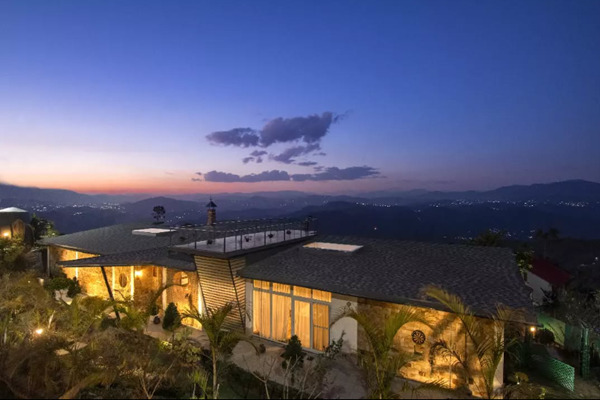
In high-altitude architecture, the challenge isn’t just surviving the cold; it’s about harnessing it. Saubhagya illustrated how glass, when engineered thoughtfully, performs beyond aesthetics. He emphasised on how energy-efficient glazing is a necessity. His projects demonstrated a precise balance where high-performance glass maximizes passive solar gain by day while offering exceptional insulation through frigid nights.
Here, transparency is not just for views but also a measurable part of the building’s thermal strategy. By integrating glass as a structural and climatic element, Saubhagya redefines it as both protector and participant in the architecture of the Himalayas.
Context-Responsive Materiality: A Dialogue with the Terrain
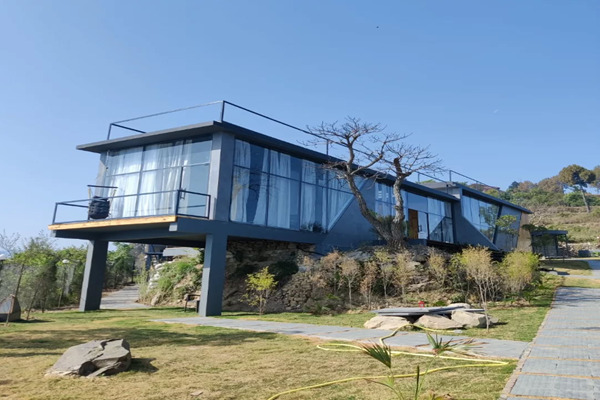
Project Name-GlassHouse Celeste
Credits- idieqtecture
In a landscape shaped by rock and wind, materials must speak the local language. Saubhagya emphasised that glass succeeds in the Himalayas only when it coexists with contextual materials such as stone, timber, and earth.
He shared projects where rough-hewn stone met refined glazing, and hand-finished wood framed high-performance windows, each element complementing the other, showcasing contextual intelligence. By using orientation and passive strategies such as angled openings, deep overhangs, and optimized fenestration, his designs harmonize with the terrain, managing harsh light and wind while echoing the wisdom of traditional Himalayan craftsmanship.
The result is a composition of materials that strike a balance between durability and dialogue.
Overcoming Remote Challenges: Logistical Ingenuity
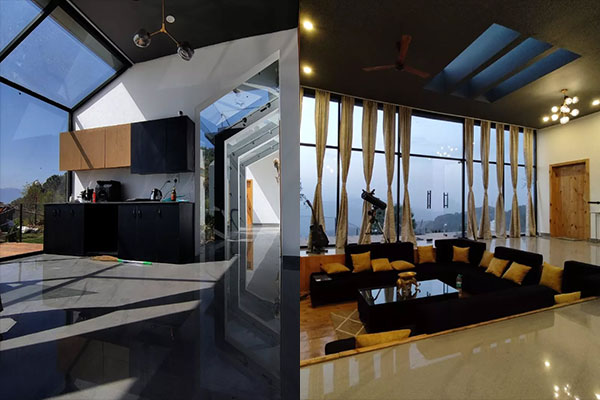
Project Name-GlassHouse Celeste
Credits- idieqtecture
Building in the Himalayas is not easy, with various challenges, including vanishing roads, weather shifts, and timelines stretched thin. Drawing from on-site experience, Saubhagya detailed the realities of building in isolation, transporting fragile panels on winding roads, training local teams, and sourcing specialized materials miles from urban centers.
His solutions were rooted in simplicity and adaptability: modular detailing, locally fabricated systems,
high-performance glass, and flexible connection joints designed for both safety and practicality.
By simplifying complex specifications, he enabled execution without compromising on precision, which is a lesson in how innovation in design often begins with innovation in delivery.
Lessons from the Land: A Deeper Design Story
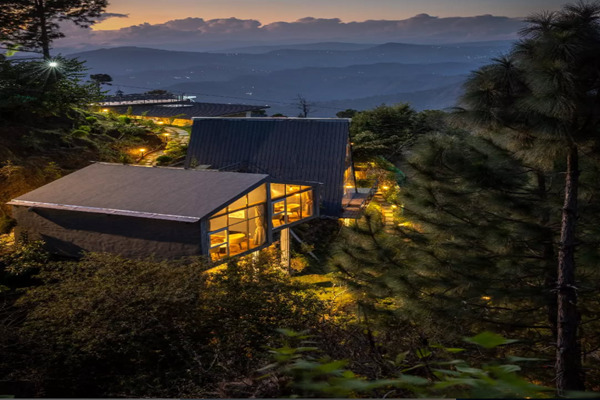
Credits- idieqtecture
Concluding the session, Saubhagya reflected on how the Himalayas have shaped not just his projects but his perspective. Working in these terrains transforms architecture from an act of control to an act of listening to the land, the people, and the rhythm of climate. His approach blends traditional wisdom with modern ingenuity, showing that architecture in extreme conditions must be both humble and high-performing.
For students and emerging professionals, his message was simple yet profound: study the context before the material, understand the “why” before the “what.” The session highlighted how glass, when paired with climate intelligence and thoughtful design, becomes more than a material—it is a bridge between transparency and protection, enabling architects to create spaces that are resilient, luminous, and deeply connected to their surroundings.
Author- Rebecca Satyasree


